


RIP: Richard Smallwood
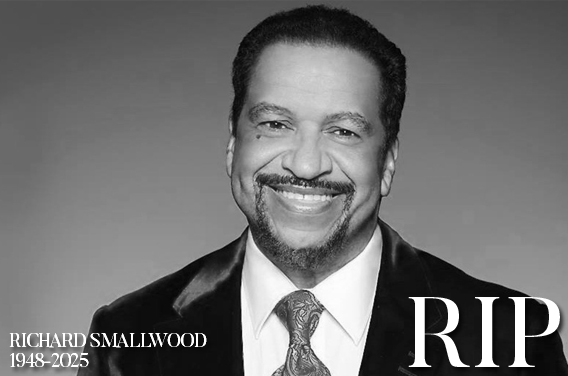
Multi-Grammy-nominated gospel music artist and “Total Praise” composer dies at the age of 77
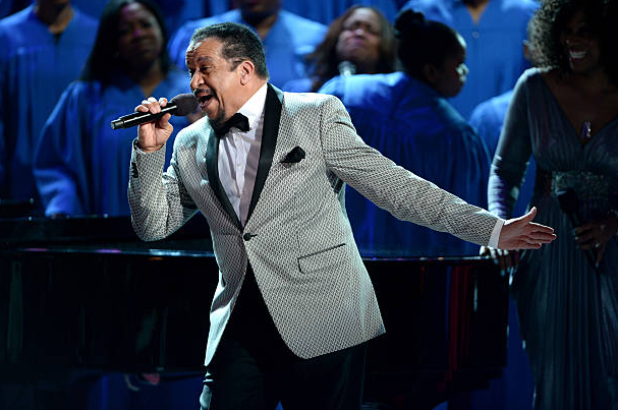
Image: Getty Images
Truly one of the last great architects and composers of the contemporary gospel era, the eight-time Grammy-nominated Richard Smallwood — affectionately dubbed “Maestro” by his peers — has passed away from kidney failure complications in a nursing home facility in Sandy Springs, MD. Various health issues plagued the singer in his latter years, including “mild dementia” according to one press release.
Songs such as “Total Praise,” “The Center of My Joy” have all been amplified from gospel radio and into churches worldwide. Many of his songs and albums have charted the top of the Billboard Gospel charts for decades, even up to 2011’s Grammy-nominated “Trust Me” and 2015’s “Same God” before nesting into a period of semi-retirement.
Even before his signing with Onyx International Records, Richard Smallwood — a double B.A. cum lade graduate of Howard University — was already making noise as a solid songwriter, penning gospel ditties that left a profound impact during his humble beginnings. “We’ve Come to Praise Him” was nationally recorded by Donald Vails in 1982, while “Give Us Peace,” a song inspired by the brutal hopelessness resulting from the Vietnam war, was first heard on the regionally-released Union Temple Young Adult Choir in 1976, way before “Oh, Happy Day” scribe Edwin Hawkins grabbed a hold of it for his famed Music and Arts Seminar in 1987. And his beloved take on Isaac Watts’ hymn “I Love the Lord” made its rounds way before Whitney Houston reprised it for The Preacher’s Wife motion picture soundtrack in 1996. It was preserved on wax by the Illinois State University Interdenominational Youth Choir back in 1980.
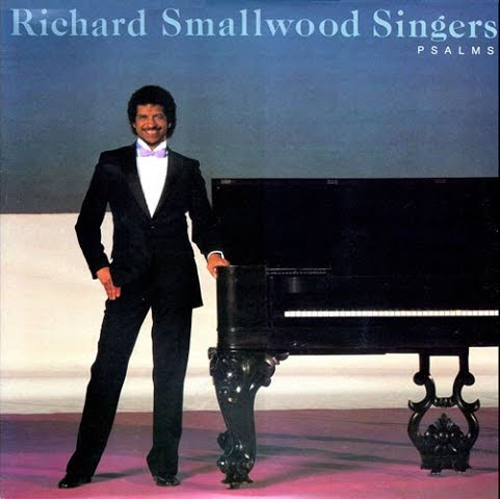
Richard Smallwood’s second LP, Psalms (1984), featuring songs “So Glad I’m Here,” Thomas Whitfield on “I Won’t Forget” and “He Won’t Leave You.”
Evidently Smallwood’s music career rose to prominence in gospel circles with the genesis of the Richard Smallwood Singers, releasing a string of albums on Onyx and later, Word Records via their black gospel division at Rejoice. Their self-titled debut LP parked itself on Billboard’s Spiritual album chart for a whopping 87 weeks, eventually taking the number one spot during its seismic run. The follow-up, 1984’s Psalms, would earned a Grammy nomination. Thanks to a distribution deal with the Herb Albert-Jerry Moss’s A&M Records, the output of Smallwood’s ‘80’s content reached larger audiences and those in contemporary Christian. Songs like “Call the Lord,” “Glorify the Lord,” “So Glad I’m Here,” “His Mercy Endureth Forever,” “You Did It All” and even his studio version of “I Love the Lord” competed heavily against the dominant backdrop of The Winans, Walter Hawkins and the influx coming from the assembly line coming out of Light Records. But it’s “Center of My Joy,” a song co-written with Southern gospel titans Bill & Gloria Gaither (see “He Touched Me” and “Because He Lives” and “Jesus, There’s Something About That Name”), is what catapulted the gospel prodigy to higher acclaim. After spending weeks at the top of Billboard’s Gospel and Spiritual Albums chart with 1987’s Textures, peaking at number 7, the masterpiece of “Center of My Joy” reached the masses and became the group’s signature song. With wings of an angel, the contemporary hymn has been covered by the likes of Ruben Studdard, Ron Kenoly and CeCe Winans.
And using the same gravitas came “Total Praise,” a thunderous worship ballad from the 1996’s Adoration: Live in Atlanta that has been covered and sung by the likes of Destiny’s Child, Fred Hammond, Patti LaBelle, Donnie McClurkin, Le’Andria Johnson, Anita Wilson, Stevie Wonder and Fantasia. It’s the kind of song that showcases the genius of Richard Smallwood within its four-minute runtime.
While signed briefly with Sparrow Records, a resounding crescendo for the Richard Smallwood Singers came about with Live: Recorded Live at Howard University. Songs like “In the Shelter,” and the go-go-laced “He’s Able” spoke volumes of Smallwood’s stylish pen. It felt like a homecoming celebration, with Smallwood paying homage to his roots. For starters, Smallwood displays his wondrous skill on the piano with “The Lord’s Prayer,” an arrangement that masterfully shows off dynamic gospel and fluttery arpeggios honed from his classical training. There’s also a gargantuan twenty-minute medley of his past hits along with a fitting tribute to two of his early influences, James Cleveland and The Davis Sisters of Philadelphia, evidenced on the Sunday morning revival strolls of “Oh Lord, Stand By Me.” And the helm is the anchoring powerful singers of Dottie Jones, Jackie Ruffin and Darlene Simmons. Under Smallwood’s care, he managed to develop a group that carried the backbone of the Caravans and maneuvered with the grace of a top-tier Motown act.
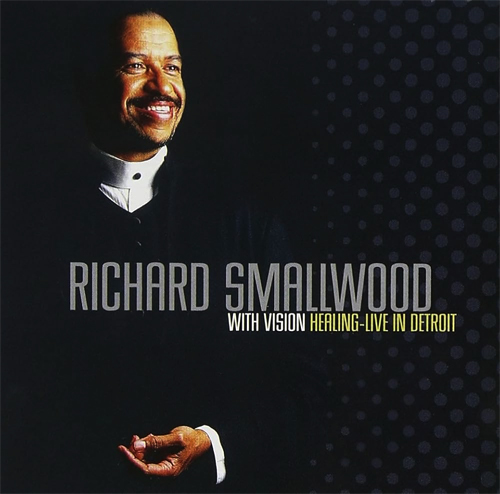
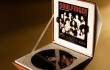
Cover art for 1999’s Healing: Live in Detroit, possibly Richard Smallwood & Vision’s magnum opus.
During my tenure as editor at large and webmaster of the now-defunct PRAYZEHYMN Online, I had the glorious privilege to hear and review his music. And with every album release on the juggernaut Verity Records — home to the hottest gospel music talent of the time, Smallwood brought the goods, even while the contemporary gospel genre was slowing up. And none left a mightier impression on me than 1999’s Healing: Live in Detroit. For sure, the album didn’t contain anything transcendent than “Total Praise,” the mighty choir anthem heard on the previous LP, Adoration: Live in Atlanta, but the gravitas of the entire project left me gobsmacked. Not a single dry cut is offered. Everything pulls you in, from the punchy powerhouse praise-and-worship ballad “Come Before His Presence” to infectious soul offerings like “The Highest Praise,” “At the Table” and the rousing album opener “Faith.” And the sheer beauty and embrace of “You Are Not Alone” reaches the comfort levels heard on Luther Vandross’s “Wait for Love” and Cyndi Lauper’s “Time After Time.” He played with a stew of funk, jazz and R&B while carefully infusing classically-primed arrangements into the mix.
I was also amazed at how Smallwood was so surrounded by greatness. There’s Philadelphia-raised Steven Ford showing off the organ and sitting in the producer’s seat, elevating him to the top of his game. Prior to this hot run as Smallwood’s producer, Ford could be heard on albums by the Gabriel Hardeman Delegation, several projects with his brother Andrew on Sweet Rain Records and the 1989 Grammy-wining Marvin Winans Family & Friends. And in those elements, the albums felt raw and a bit unpolished. But with Smallwood, the polish and sheen was there, elevating these live recordings into a Quincy Jones-like virtuoso session that could only be mustered in a state-of-the-art Hollywood studio. Ford may have found his calling as producer extraordinaire while serving on Carlton Pearson & the Higher Dimensions Choir’s Live (1994), where the lure of his post-production with ebullient horns and strings exceeded industry expectations. but a series of live albums from Richard Smallwood & Vision put Ford in high demand. By incorporating live horns, full string sections and a captured live experience flooding with sweeping reprises, glamed up intros (see “Anthem of Praise”) and piano solos, Smallwood’s output from 1996 to 2011 bears a similar weight of pinnacle fervor to Walter Hawkins’ Love Alive series.
With every phase of growth comes new aspirations. Every gospel titan has pretty much done it, from James Cleveland to Edwin Hawkins. With Smallwood came the idea of developing a new group. And one that could better adapt to the fresher breezes entering in the styles of ‘90’s gospel. Enter Vision, a new cluster of auditioned singers creating a fuller sound formatted to the likes of the mass choir phenomenon anchored by the Mississippi Mass Choir, the Whitfield Company of Detroit and Milton Brunson’s Thompson Community Singers of Chicago. The inspiration from the name comes from his own 1988 album with the Richard Smallwood Singers. Inside the chamber of this new aggregation of singers bold voices rung the voices of Vanessa Williams (not to be confused with the “Save the Best for Last” singer), Maurette Brown Clark, Charisse Nelson-McIntosh, Ted Winn, Debbie Steel-Hall and the return of Darlene Simmons of the Smallwood Singers.
Smallwood’s work with Vision followed in the golden footsteps of his contemporary gospel peers like Thomas Whitfield, Edwin Hawkins and Walter Hawkins, and graciously competed with the top choir-led stars of the era including Kirk Franklin, John P. Kee, Hezekiah Walker, Donald Lawrence and Ricky Dillard. Without using glitzy marketing campaigns and flashy choreography, Smallwood relied on his pen, virtuoso piano playing and artistic flair to do the work, elevating him to a Stevie Wonder status.
Chaka Khan, who recorded with Smallwood for Journey: Live in New York, wrote a touching tribute to Smallwood on social media, solidifying the legend of his artistry. “Richard Smallwood opened up my whole world of gospel music. His music didn’t just inspire me, it transformed me,” she writes. “He is my favorite pianist, and his brilliance, spirit, and devotion to the music have shaped generations, including my own journey. He will be greatly missed, and his legacy will continue to live through every note and every soul he touched. I am truly looking forward to singing with you in heaven.”
In a 2015 interview with Journal of Gospel Music’s Bob Marovich, Smallwood — a multiple Dove and Stellar Award winner — spoke of the sudden impact his music has had on its listeners. “I always want my music to make a positive difference in people’s lives. Whatever they are dealing with—financial issues, health issues, personal issues—I hope that something is conveyed to them through the recording that will help them to believe they can make it, through whatever obstacle t



























J, What a beautiful tribute. Written like only you can.